








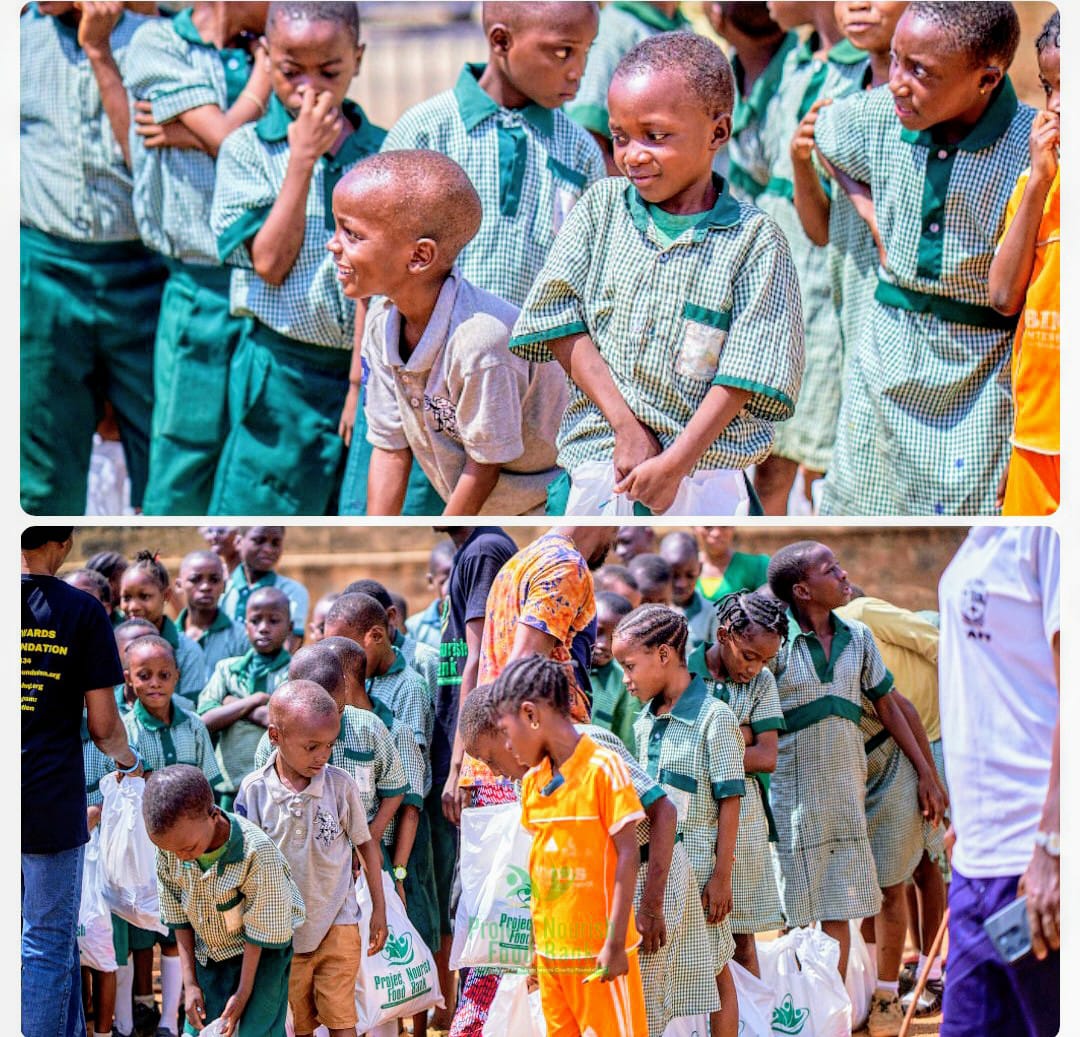
The RuffyEdwards Empowerment Initiative has extended its humanitarian outreach to public schools in Ibadan by delivering food support to pupils of St. James’s Primary School, Okebola under its flagship programme called ‘Project Nourish Food Bank’.
The outreach, held on Wednesday, provided hundreds of pupils with essential food items, including rice, garri, spaghetti, semolina, vegetable oil and other staple supplies to support their households.
The intervention is part of the initiative’s efforts to address what it described as a growing but often overlooked challenge of hunger among school children, particularly in underserved communities.


For many of the beneficiaries, access to consistent and nutritious meals remains uncertain, a situation that continues to affect not only their physical wellbeing but also their concentration and academic performance.
Speaking during the exercise, the Founder of the initiative, Princess Adedolapo Oni, said the programme was designed to go beyond food distribution.
“This is about restoring dignity, giving hope and creating an environment where children can truly focus on their education without the distraction of hunger,” she said.
She noted that Project Nourish Food Bank is steadily evolving into a community-driven movement aimed at bridging the gap between education and basic nutrition in order to ensure that children are not disadvantaged in school due to lack of food.
Oni also expressed appreciation to sponsors, partners and supporters whose contributions, she said, have sustained the initiative and expanded its reach to vulnerable families.
According to her, the outreach at St. James’s Primary School is one of several planned interventions, with efforts underway to extend support to more schools and communities in the coming months.
The exercise was marked by visible excitement among the pupils, many of whom left with food supplies for their families, a gesture that organisers say reinforces the impact of collective community support.
Stakeholders at the event equally reiterated that tackling hunger at the grassroots level remains critical to improving educational outcomes.
They noted that sustained collaboration will be key to achieving long-term impact remains strategic approach and critical towards the actualization of good healthy for every Nigerian child.
As the outreach continues to expand to other areas, the initiative maintains that addressing hunger in classrooms is not only a welfare concern but also an investment in the future, one child and one school at a time.